Contents
1Introduction
Most purchases can be inspected before they are paid for. A renovation cannot. A new kitchen, a rebuilt bathroom, a rendered facade or a garden with a pool exists at the moment of decision only as a description, a sample, a plan or a picture in the client's head. The purchase is large, infrequent and difficult to reverse, and the client has little experience from which to predict how the finished result will look or feel.
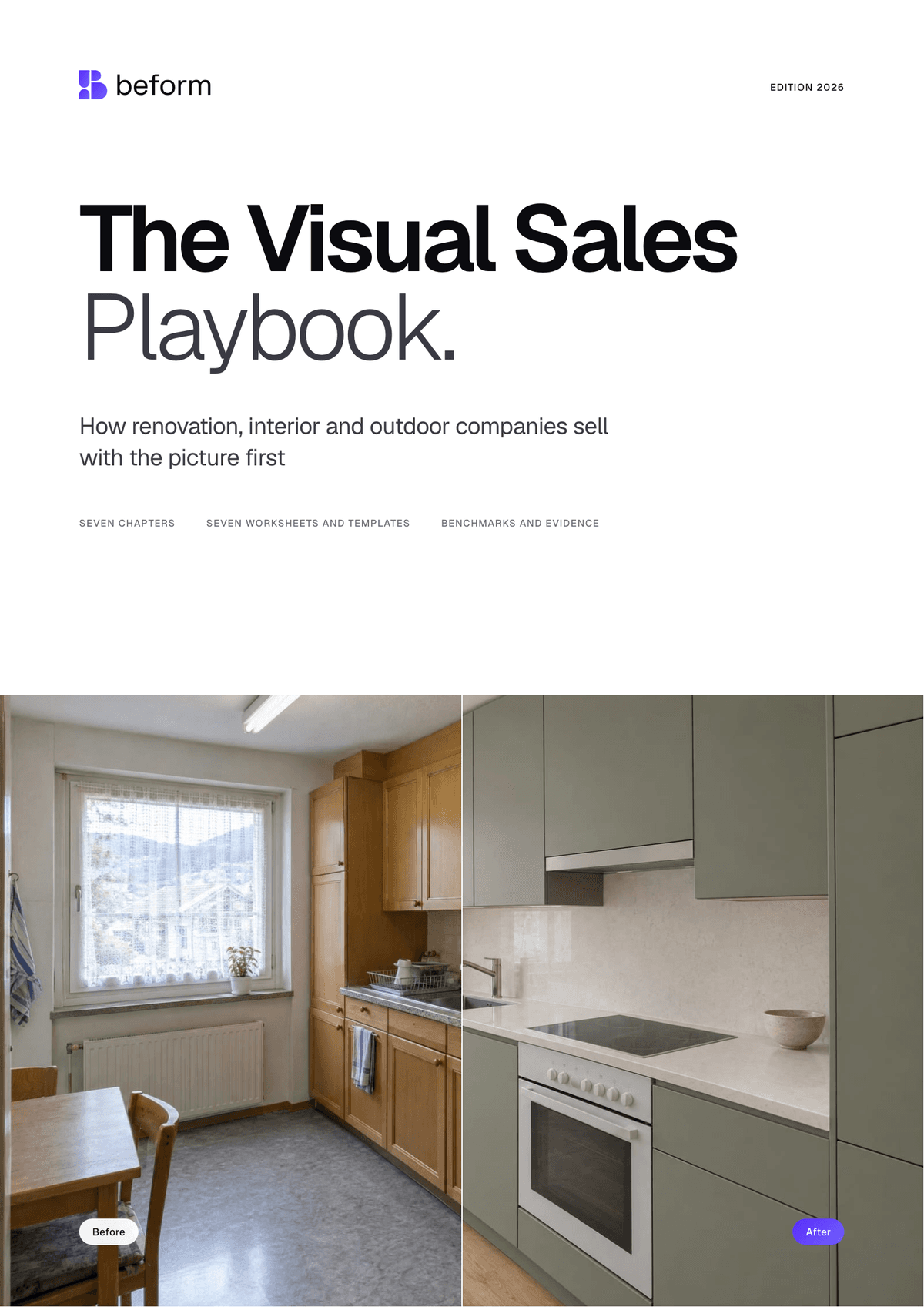
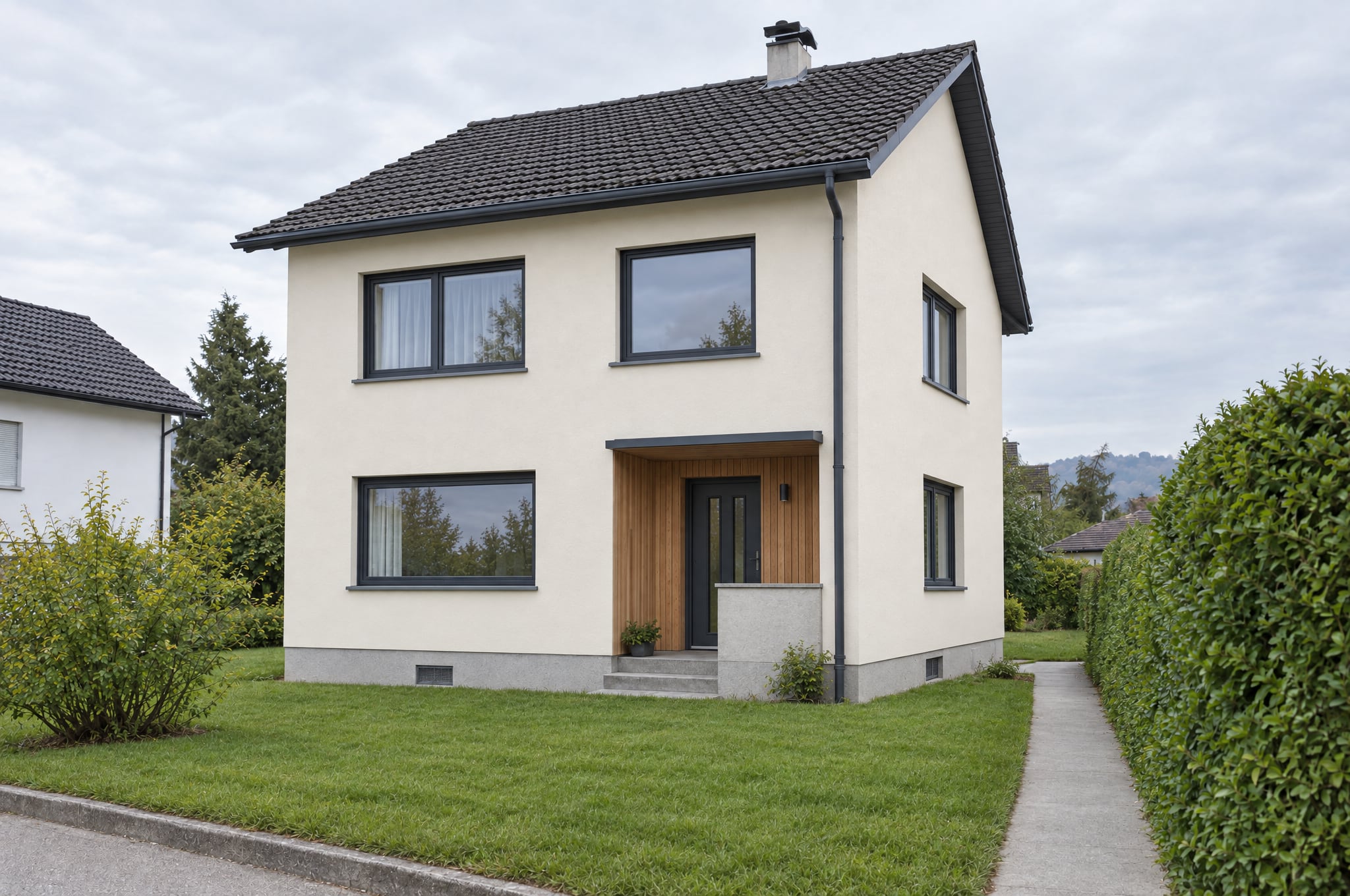
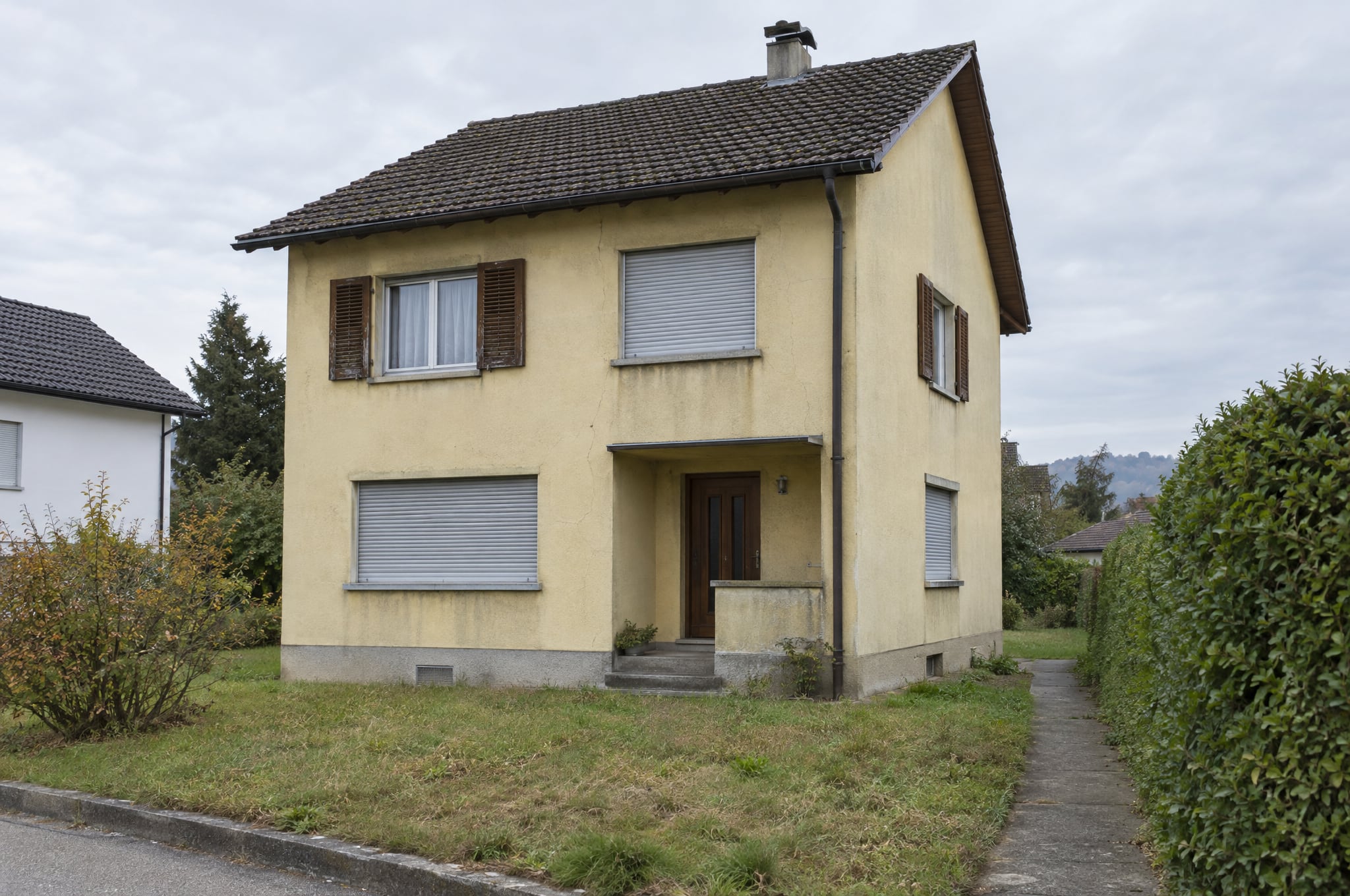
Sellers respond to this uncertainty in two ways. They describe, with words, samples, catalogues and photographs of other people's projects. Or they draw, with plans and renderings produced before any contract exists. Descriptions leave the uncertainty largely with the client. Drawings move it to the seller as unpaid work, and a drawing that is not accepted is lost effort. Both strategies leave the same gap between what the client imagines and what the company quotes.
This paper asks a simple question: what does the research say about closing that gap early, with a realistic depiction of the client's own space? We do not evaluate any product. We assemble the mechanisms that make the question worth asking, examine how well they transfer from their original domains, and state them as propositions that can be tested in the field.
2Buying an outcome that does not exist yet
2.1 Search, experience and credence qualities
Economics distinguishes goods whose quality can be judged before purchase, search qualities, from goods judged only through use, experience qualities (Nelson, 1970), and from those whose quality the buyer may never fully judge, credence qualities (Darby & Karni, 1973). Renovation work combines all three. Finishes can partly be searched, the lived result is experienced after completion, and much of the workmanship behind walls is taken on trust. Zeithaml (1981) argued that buyers of offerings high in experience and credence qualities perceive more risk, look for surrogate cues and rely more heavily on price and tangible evidence to judge quality.
2.2 The imagination gap
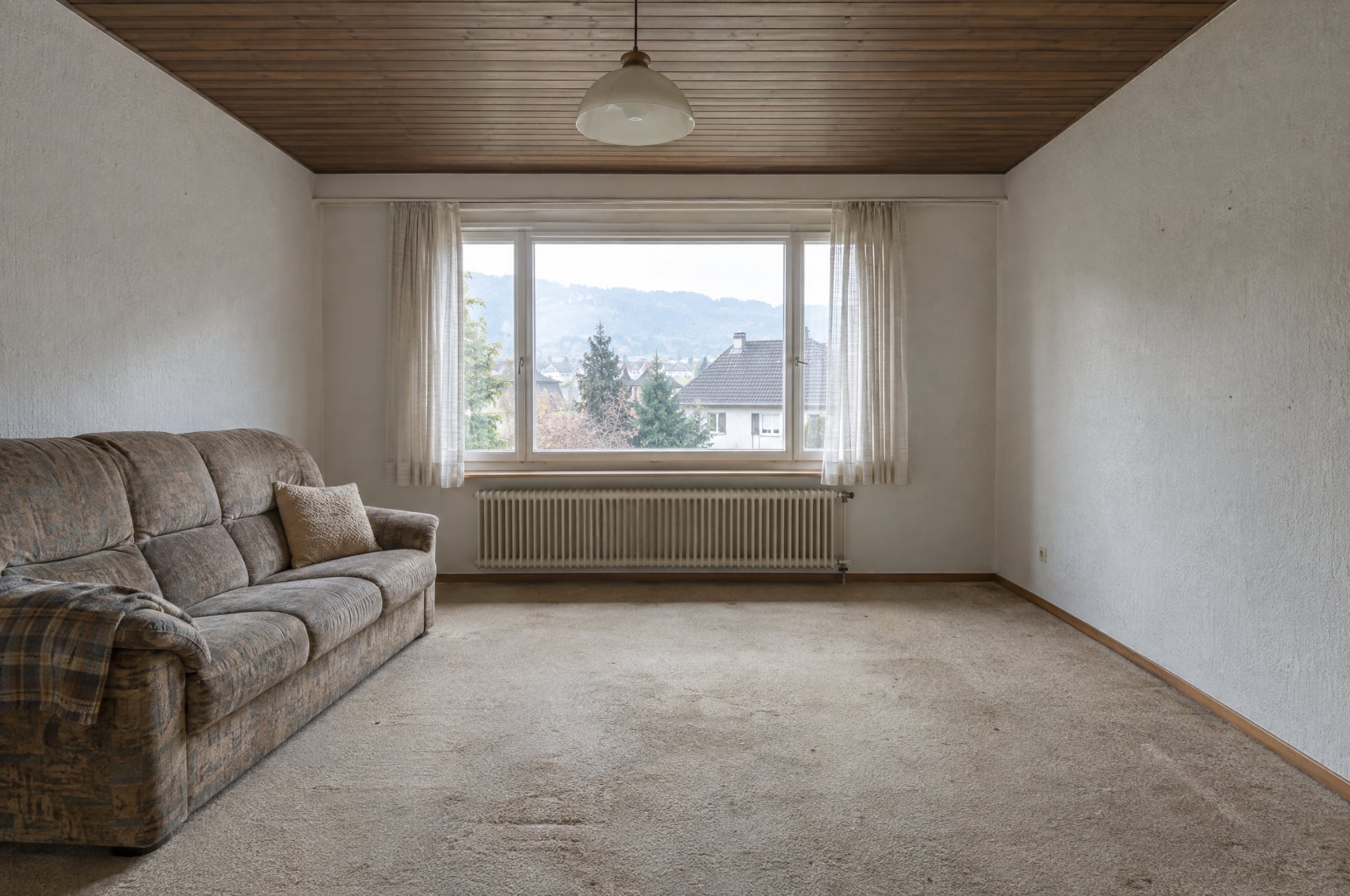
When the outcome cannot be inspected, the client simulates it. Research on prospection shows that people predict their future feelings by mentally simulating future events, and that these simulations are systematically incomplete: unrepresentative, essentialised, abbreviated and decontextualised (Gilbert & Wilson, 2007). A client picturing a new kitchen tends to picture an idealised kitchen, not their own room with its window, its ceiling height and its evening light. The seller cannot see the simulation at all and has to infer it from words such as modern, warm or bright, whose meaning differs from person to person.
The translation is costly. Holding and manipulating a verbal description of a spatial arrangement loads working memory (Sweller, 1988), and Larkin and Simon (1987) showed that diagrams make explicit what a sentential representation leaves to be computed. In a renovation conversation both parties perform this computation separately, and they rarely arrive at the same picture.
2.3 Where the sale stalls
- For the end client, the decision feels risky and is postponed.
- For the consultant, the first meeting becomes unpaid discovery, and speculative drawings can absorb many hours before any commitment exists.
- For the company, offers are compared on the one attribute that is fully visible, the price, and a detailed offer can become a free brief for a cheaper competitor.
3Theoretical framework
3.1 Pictures are understood faster and remembered better
The picture superiority effect describes the robust finding that pictures are remembered better than their verbal labels (Nelson, Reed & Walling, 1976). Recognition for pictures seen once is close to ceiling and exceeds recognition for words and sentences (Shepard, 1967), and participants who viewed thousands of pictures once still recognised the large majority of them (Standing, 1973). Comprehension is also fast: observers can detect whether a picture matches a named scene when it is shown for as little as 13 milliseconds in a rapid sequence (Potter, Wyble, Hagmann & McCourt, 2014).
In instruction, the multimedia principle states that people learn more deeply from words and pictures together than from words alone (Mayer, 2009). The implication for a sales conversation is modest but important. A depiction is not decoration added to an argument. It is the fastest and most durable way to establish a shared understanding of a spatial outcome.
3.2 Mental simulation and the imagined self
Consumers evaluate products partly by imagining themselves using them. Escalas (2004) showed that advertising which encourages mental simulation increases narrative transportation, which in turn increases persuasion. Elder and Krishna (2012) found that depicting a product in an orientation that makes its use easy to imagine facilitates embodied mental simulation and increases purchase intentions. Imagery more broadly shapes how product information is processed and remembered (MacInnis & Price, 1987).
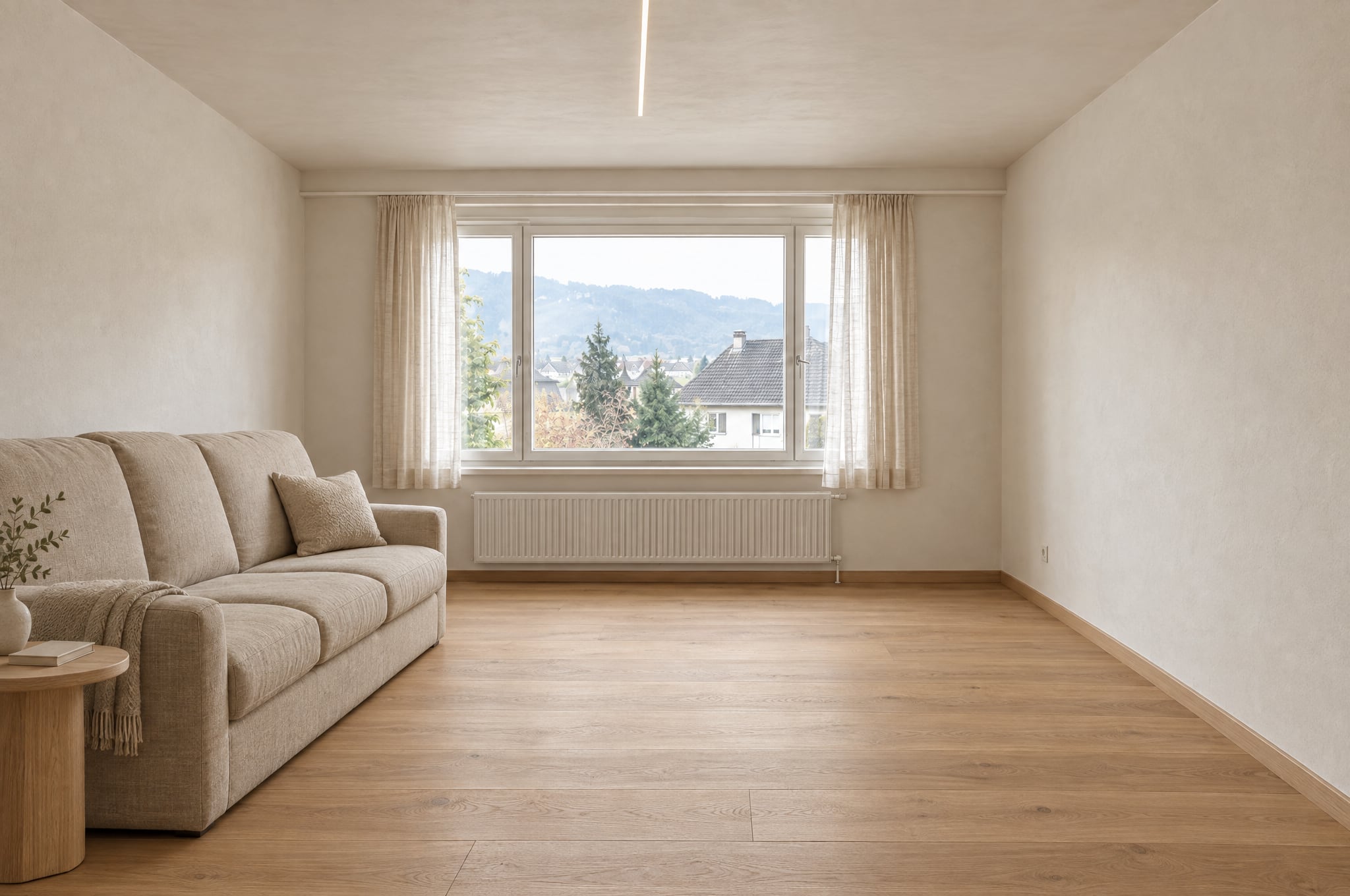
A renovation client's simulation is effortful and generic because there is nothing specific to simulate with. A realistic depiction of their own room supplies the missing specificity: the client no longer has to construct the future scene, only to inhabit it. Fluency research suggests this matters beyond comprehension, because stimuli that are easier to process tend to be judged more positively (Reber, Schwarz & Winkielman, 2004).
3.3 Psychological distance and construal
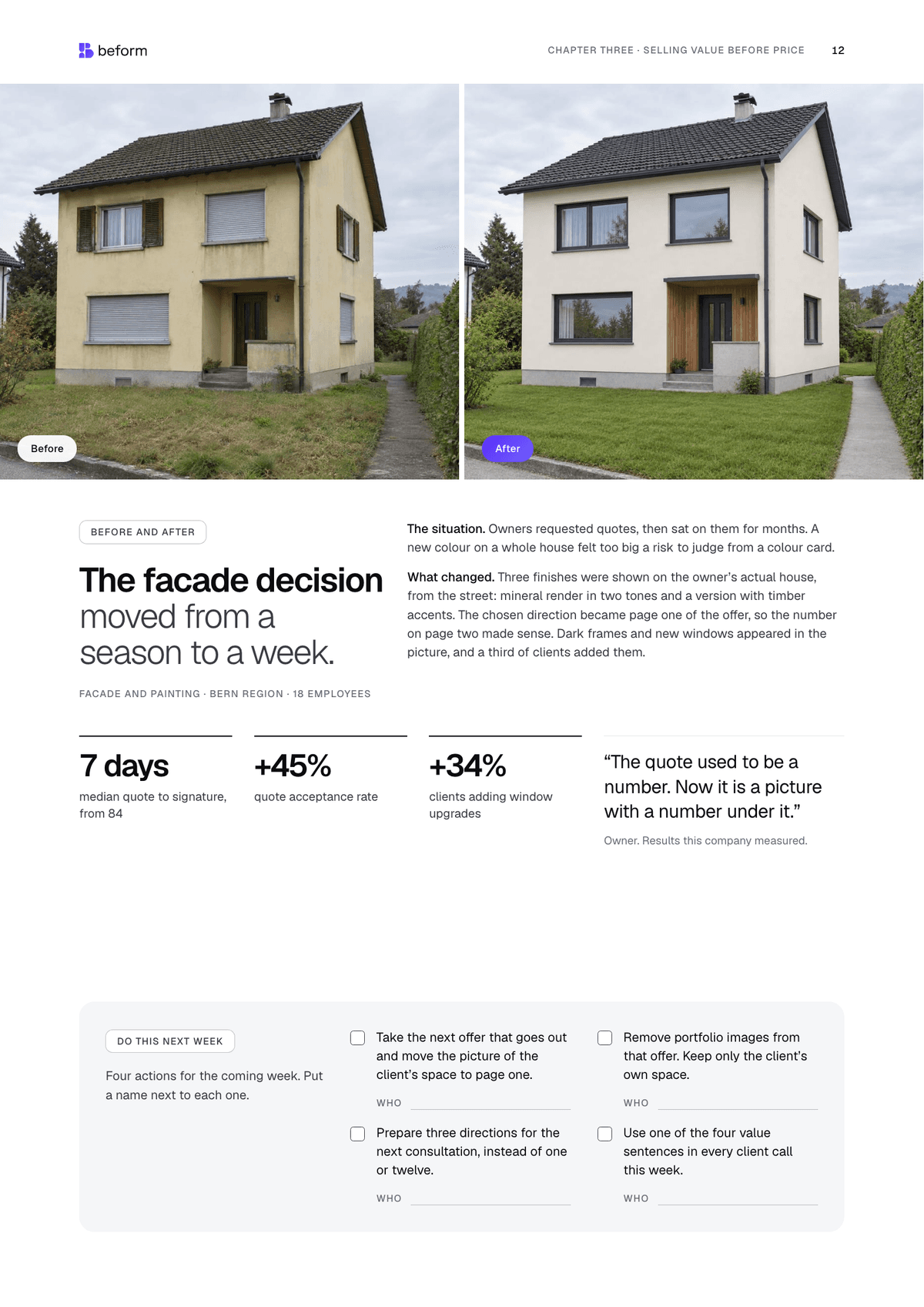
Construal level theory holds that psychologically distant events are represented abstractly, in terms of general goals, while near events are represented concretely, in terms of specific details and feasibility (Trope & Liberman, 2010). A renovation months away is distant in time and hypothetical in form, so clients reason about it in terms of style and aspiration and struggle with concrete choices such as a front colour or a tile format. A concrete depiction of the client's own space reduces hypotheticality and moves the conversation to the level at which decisions are actually made.
3.4 Ambiguity, loss aversion and anticipated regret
Decision makers prefer known risks to unknown ones. Ellsberg (1961) showed that people avoid options whose probabilities are ambiguous, even when the expected outcome is the same. In renovation the ambiguity concerns the outcome itself, and the aversion appears as postponement: when the result cannot be pictured, doing nothing is the least ambiguous option.
Loss aversion amplifies this. Prospect theory proposes that losses weigh more heavily than equivalent gains (Kahneman & Tversky, 1979), with later estimates suggesting roughly twice as heavily (Tversky & Kahneman, 1992). A client afraid of paying a large sum for a result they will dislike weighs that possible loss heavily against the imagined gain. Regret theory adds that people anticipate regret and act to avoid it, including by delaying decisions (Zeelenberg & Pieters, 2007). Seeing the result narrows the space in which regret can be imagined.
3.5 Ownership, co-creation and the value of making
People value what they feel they own. In the classic endowment experiments, owners asked roughly twice as much to give up an object as buyers would pay for it (Kahneman, Knetsch & Thaler, 1990). Psychological ownership can form before legal ownership: merely touching a product increases perceived ownership and valuation (Peck & Shu, 2009).
Participation strengthens this. People value products they helped create more highly, the IKEA effect (Norton, Mochon & Ariely, 2012), and customers who design their own products are willing to pay more for them, partly because of a feeling of accomplishment (Franke, Schreier & Kaiser, 2010). Taking part in co-production also changes how customers attribute and evaluate outcomes (Bendapudi & Leone, 2003). A client who chooses fronts, floors and light in a picture of their own room is not only informed about the outcome. They have begun to make it theirs.
3.6 Choice architecture and curated directions
More options do not always help. In a well known field experiment, shoppers who saw a display of 24 jams were far less likely to buy than shoppers who saw six, about 3 percent against about 30 percent (Iyengar & Lepper, 2000). A later meta-analysis found the effect to be highly dependent on context (Scheibehenne, Greifeneder & Todd, 2010), which is itself instructive: overload appears when options are hard to compare and preferences are not yet formed. Both conditions describe a client facing a renovation catalogue. A few coherent directions, each shown in the client's own space and then refined, fit these conditions better than open browsing.
3.7 Price as the fallback cue
When quality is hard to judge, buyers infer it from what is available. An integrative review found a positive and significant relationship between price and perceived quality across studies (Rao & Monroe, 1989), and the first number named anchors later judgements (Tversky & Kahneman, 1974). If the first concrete artefact a client receives is a quote, the conversation is anchored on price. If the first artefact is a depiction of the finished result, the quote is read against a value the client can already see.
| Mechanism | Key sources | Implication |
|---|---|---|
| Picture superiority and fast comprehension | Nelson et al., 1976; Standing, 1973; Potter et al., 2014 | A depiction creates shared understanding faster and more durably than description. |
| Mental simulation | Escalas, 2004; Elder & Krishna, 2012 | Showing the client's own space makes the future outcome easy to inhabit. |
| Psychological distance | Trope & Liberman, 2010 | Concrete depictions move the conversation from aspiration to decision. |
| Ambiguity and loss aversion | Ellsberg, 1961; Tversky & Kahneman, 1992 | Less outcome ambiguity means less postponement. |
| Ownership and co-creation | Peck & Shu, 2009; Norton et al., 2012; Franke et al., 2010 | Choosing inside the picture builds attachment before the contract. |
| Choice architecture | Iyengar & Lepper, 2000; Scheibehenne et al., 2010 | A few coherent directions, refined in place, beat open catalogues. |
| Price as cue and anchor | Rao & Monroe, 1989; Tversky & Kahneman, 1974 | Show the result first, name the number second. |
4Evidence from adjacent markets
4.1 Augmented reality and visual try-on in retail
The closest large scale evidence comes from retail technologies that let customers see products in their own context. Using field data from an online retailer, Tan, Chandukala and Reddy (2022) found that the use of augmented reality was associated with higher sales, with stronger effects where pre-purchase uncertainty is higher, for example for less popular products and for customers new to the channel. Hilken and colleagues (2017) showed that augmented reality experiences which embed a product in the customer's own environment increase spatial presence, which in turn raises perceived value and decision comfort.
These findings share the structure of the renovation problem at a smaller scale. The customer is uncertain how a product will look in their own space, and a depiction in that space reduces the uncertainty. Renovation raises the stakes on every dimension that matters here: price, irreversibility and the size of the change.
4.2 Visualisation in architecture, engineering and construction
In the construction literature, visualisation has long been recognised as a communication tool between professionals and clients who cannot read technical drawings (Bouchlaghem, Shang, Whyte & Ganah, 2005). Realistic renderings have traditionally been expensive and slow, produced late in design and reserved for larger projects. The mechanisms reviewed here suggest that a large part of their value lies earlier, at the moment of first commitment, when the client is deciding whether to proceed at all.
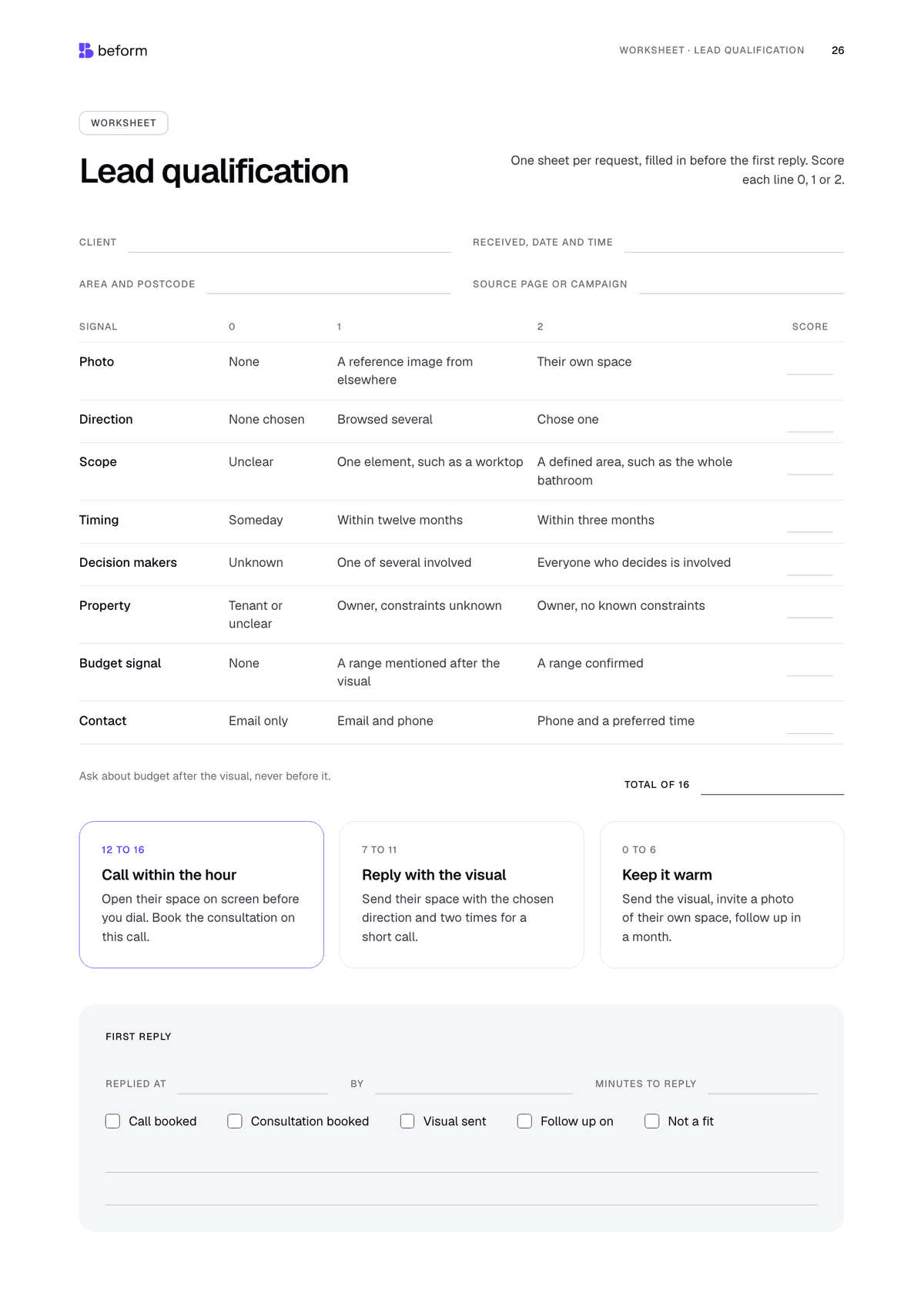
4.3 Speed of response in lead conversion
Clarity interacts with time. An audit of how companies respond to online inquiries found that firms which tried to contact a prospect within an hour were nearly seven times as likely to qualify the lead as firms that waited longer (Oldroyd, McElheran & Elkington, 2011). Interest decays quickly. A depiction delivered at the moment of inquiry reaches the client while intent is highest and gives the first human contact something concrete to discuss.
| Finding | Source | Context |
|---|---|---|
| About 30 percent bought with 6 options on display, about 3 percent with 24 | Iyengar & Lepper, 2000 | Field experiment, grocery store |
| Owners asked roughly twice what buyers would pay for identical goods | Kahneman, Knetsch & Thaler, 1990 | Laboratory experiments |
| Losses weighed roughly twice as heavily as equivalent gains | Tversky & Kahneman, 1992 | Choice experiments, parameter estimates |
| Meaning detected in pictures shown for 13 milliseconds | Potter et al., 2014 | Rapid serial visual presentation |
| Contact within an hour: nearly seven times as likely to qualify a lead | Oldroyd, McElheran & Elkington, 2011 | Audit of company responses to online inquiries |
| Augmented reality use associated with higher sales, more so under higher uncertainty | Tan, Chandukala & Reddy, 2022 | Field data, online retailer |
5A model of the visual decision pathway
Integrating these mechanisms, we propose a four stage pathway for projects that are bought before they exist (Figure 3).
Stage 1
Imagination
A private, idealised picture the seller cannot see
Stage 2
Ambiguity
Postponement, discovery meetings, comparison on price
Stage 3
Depiction
A realistic picture of the client's own space, shared
Stage 4
Commitment
A decision on the outcome, the price read against it
- Imagination. The client holds an incomplete, idealised simulation of the result that the seller cannot see.
- Ambiguity. Without a shared picture, uncertainty about the outcome drives postponement, discovery meetings and comparison on price.
- Depiction. A realistic depiction of the client's own space replaces private simulation with a shared, concrete representation.
- Commitment. With ambiguity reduced and a sense of ownership formed, the client decides on the outcome and evaluates the price against it.
The model does not claim that a depiction replaces professional judgement on feasibility, cost or construction. It locates where in the sale a depiction does its work: early, before the offer, when uncertainty is highest and a traditional drawing is least justified.
6Implications
6.1 For end clients
Clients gain a way to express what they want without technical vocabulary and to test directions before paying for them. Research on anticipated regret suggests that decisions made against a concrete picture should feel less risky and be less prone to later reversal, although this has yet to be tested in renovation.
6.2 For consultants and sales teams
Consultants can move discovery from the meeting to the moment of inquiry and spend the meeting refining rather than guessing. Co-creation research suggests that refinements made with the client, inside the picture, contribute to commitment rather than delaying it.
6.3 For companies, retailers and manufacturers
Companies can qualify inquiries by intent rather than by form fields, reduce speculative drawing and present offers anchored on a visible result instead of a number. For retailers and manufacturers of finishes the same mechanism applies at the level of the range: a material seen in the customer's own space carries more information than a sample under showroom light.
7Propositions for empirical testing
- P1Inquiries accompanied by a depiction of the client's own space convert to appointments at a higher rate than inquiries submitted through a conventional contact form.
- P2Clients who receive a depiction before the offer take less time from first contact to signature.
- P3Offers presented with a depiction of the chosen direction are less sensitive to competing lower quotes.
- P4Clients who select materials within a depiction report higher psychological ownership and lower anticipated regret than clients who select from physical samples.
- P5The effect of depiction on commitment is larger for higher priced and less reversible projects.
- P6A small number of coherent directions shown in the client's space leads to faster decisions than open catalogue browsing.
8Limitations
Most mechanisms reviewed here were established in laboratory settings or in retail, not in renovation. Effect sizes do not transfer directly, and some findings, choice overload among them, have proven sensitive to context. Depictions can also mislead: a rendering that promises a result the project cannot deliver moves uncertainty into later disappointment rather than removing it. Field experiments in renovation sales, ideally with random assignment of visual and non visual inquiry paths, are needed to estimate real effects.
9Conclusion
The sale of renovation, interior and outdoor projects asks clients to commit to an outcome they cannot see. Research across psychology, consumer behaviour and economics converges on the same explanation for why this is hard, and on the same direction for making it easier: replace private imagination with a shared, concrete depiction of the client's own space, as early in the sale as possible. The mechanisms are well established. Field evidence in this specific market is not, and that is where the next work should begin.
References
- Bendapudi, N., & Leone, R. P. (2003). Psychological implications of customer participation in co-production. Journal of Marketing, 67(1), 14-28. Google Scholar
- Bouchlaghem, D., Shang, H., Whyte, J., & Ganah, A. (2005). Visualisation in architecture, engineering and construction (AEC). Automation in Construction, 14(3), 287-295. Google Scholar
- Darby, M. R., & Karni, E. (1973). Free competition and the optimal amount of fraud. Journal of Law and Economics, 16(1), 67-88. Google Scholar
- Elder, R. S., & Krishna, A. (2012). The “visual depiction effect” in advertising: Facilitating embodied mental simulation through product orientation. Journal of Consumer Research, 38(6), 988-1003. Google Scholar
- Ellsberg, D. (1961). Risk, ambiguity, and the Savage axioms. Quarterly Journal of Economics, 75(4), 643-669. Google Scholar
- Escalas, J. E. (2004). Imagine yourself in the product: Mental simulation, narrative transportation, and persuasion. Journal of Advertising, 33(2), 37-48. Google Scholar
- Franke, N., Schreier, M., & Kaiser, U. (2010). The “I designed it myself” effect in mass customization. Management Science, 56(1), 125-140. Google Scholar
- Gilbert, D. T., & Wilson, T. D. (2007). Prospection: Experiencing the future. Science, 317(5843), 1351-1354. Google Scholar
- Hilken, T., de Ruyter, K., Chylinski, M., Mahr, D., & Keeling, D. I. (2017). Augmenting the eye of the beholder: Exploring the strategic potential of augmented reality to enhance online service experiences. Journal of the Academy of Marketing Science, 45(6), 884-905. Google Scholar
- Iyengar, S. S., & Lepper, M. R. (2000). When choice is demotivating: Can one desire too much of a good thing? Journal of Personality and Social Psychology, 79(6), 995-1006. Google Scholar
- Kahneman, D., Knetsch, J. L., & Thaler, R. H. (1990). Experimental tests of the endowment effect and the market problem. Journal of Political Economy, 98(6), 1325-1348. Google Scholar
- Kahneman, D., & Tversky, A. (1979). Prospect theory: An analysis of decision under risk. Econometrica, 47(2), 263-291. Google Scholar
- Larkin, J. H., & Simon, H. A. (1987). Why a diagram is (sometimes) worth ten thousand words. Cognitive Science, 11(1), 65-100. Google Scholar
- MacInnis, D. J., & Price, L. L. (1987). The role of imagery in information processing: Review and extensions. Journal of Consumer Research, 13(4), 473-491. Google Scholar
- Mayer, R. E. (2009). Multimedia learning (2nd ed.). Cambridge University Press. Google Scholar
- Nelson, D. L., Reed, V. S., & Walling, J. R. (1976). Pictorial superiority effect. Journal of Experimental Psychology: Human Learning and Memory, 2(5), 523-528. Google Scholar
- Nelson, P. (1970). Information and consumer behavior. Journal of Political Economy, 78(2), 311-329. Google Scholar
- Norton, M. I., Mochon, D., & Ariely, D. (2012). The IKEA effect: When labor leads to love. Journal of Consumer Psychology, 22(3), 453-460. Google Scholar
- Oldroyd, J. B., McElheran, K., & Elkington, D. (2011). The short life of online sales leads. Harvard Business Review, 89(3). Google Scholar
- Peck, J., & Shu, S. B. (2009). The effect of mere touch on perceived ownership. Journal of Consumer Research, 36(3), 434-447. Google Scholar
- Potter, M. C., Wyble, B., Hagmann, C. E., & McCourt, E. S. (2014). Detecting meaning in RSVP at 13 ms per picture. Attention, Perception, & Psychophysics, 76(2), 270-279. Google Scholar
- Rao, A. R., & Monroe, K. B. (1989). The effect of price, brand name, and store name on buyers’ perceptions of product quality: An integrative review. Journal of Marketing Research, 26(3), 351-357. Google Scholar
- Reber, R., Schwarz, N., & Winkielman, P. (2004). Processing fluency and aesthetic pleasure: Is beauty in the perceiver’s processing experience? Personality and Social Psychology Review, 8(4), 364-382. Google Scholar
- Scheibehenne, B., Greifeneder, R., & Todd, P. M. (2010). Can there ever be too many options? A meta-analytic review of choice overload. Journal of Consumer Research, 37(3), 409-425. Google Scholar
- Shepard, R. N. (1967). Recognition memory for words, sentences, and pictures. Journal of Verbal Learning and Verbal Behavior, 6(1), 156-163. Google Scholar
- Standing, L. (1973). Learning 10,000 pictures. Quarterly Journal of Experimental Psychology, 25(2), 207-222. Google Scholar
- Sweller, J. (1988). Cognitive load during problem solving: Effects on learning. Cognitive Science, 12(2), 257-285. Google Scholar
- Tan, Y.-C., Chandukala, S. R., & Reddy, S. K. (2022). Augmented reality in retail and its impact on sales. Journal of Marketing, 86(1), 48-66. Google Scholar
- Trope, Y., & Liberman, N. (2010). Construal-level theory of psychological distance. Psychological Review, 117(2), 440-463. Google Scholar
- Tversky, A., & Kahneman, D. (1974). Judgment under uncertainty: Heuristics and biases. Science, 185(4157), 1124-1131. Google Scholar
- Tversky, A., & Kahneman, D. (1992). Advances in prospect theory: Cumulative representation of uncertainty. Journal of Risk and Uncertainty, 5(4), 297-323. Google Scholar
- Zeelenberg, M., & Pieters, R. (2007). A theory of regret regulation 1.0. Journal of Consumer Psychology, 17(1), 3-18. Google Scholar
- Zeithaml, V. A. (1981). How consumer evaluation processes differ between goods and services. In J. H. Donnelly & W. R. George (Eds.), Marketing of services. American Marketing Association. Google Scholar
Cite this paper
beform. (2026). Seeing before deciding: Visual anticipation, outcome uncertainty and commitment in the sale of renovation, interior and outdoor projects (Working paper No. 1). https://www.beform.ai/research